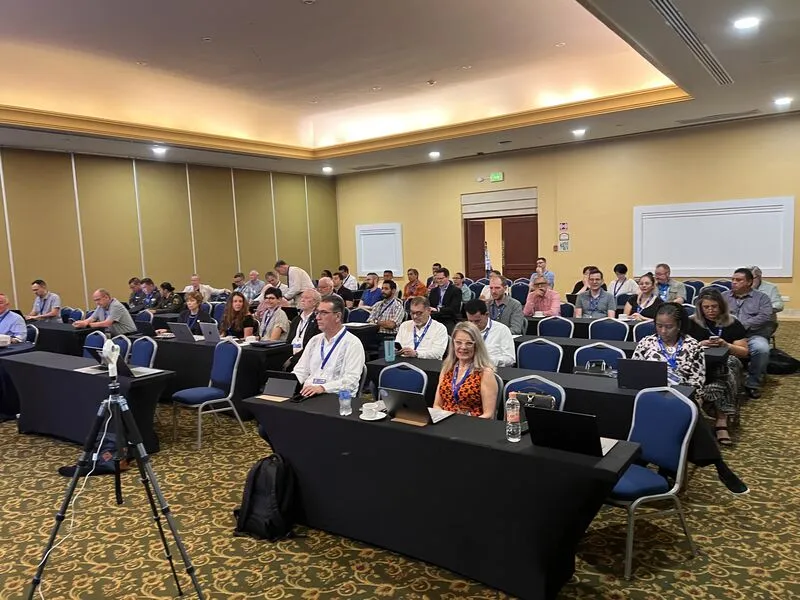
Fair2Adapt at the 132nd OGC Member Meeting in Mérida, Mexico, 9-12 June 2025
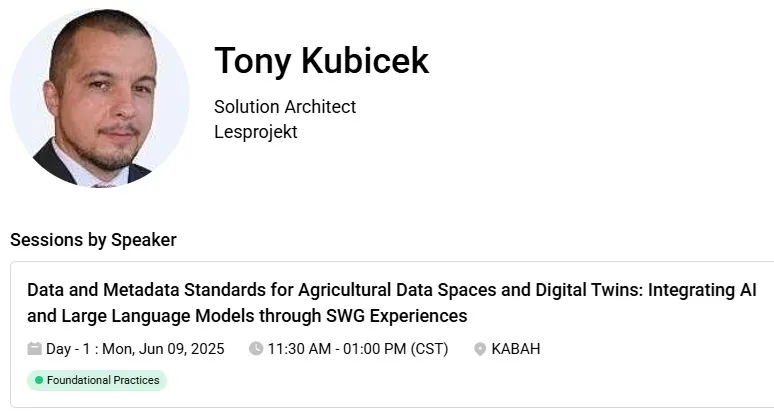
Presented at the 132nd OGC Member Meeting in Mérida, Mexico, Tony Kubicek (Lesprojekt) argued on 9 June 2025 that geospatial metadata must evolve for the era of Digital Twins and LLMs. Today’s dominant standards (e.g., ISO 19115, DCAT, STAC) are often static and dataset-centric, which makes it harder for AI-driven systems to interpret context, assess quality, and connect across heterogeneous sources—exactly what operational Digital Twins require.
The talk proposes moving from static catalog records to an adaptive, AI-compatible metadata layer that combines structured fields and APIs with semantic mappings, provenance, quality signals, and embeddings—so metadata becomes queryable and intent-aware. A practical path forward is a Metadata Middleware/Intelligence Hub that aligns schemas (e.g., via mapping frameworks), supports audit trails for AI-generated metadata, and provides natural-language querying with transparent, traceable results—illustrated through an agricultural Digital Twin integrating climate data (ERA5), land use (LPIS), sensors, remote sensing, and lab/biological data.
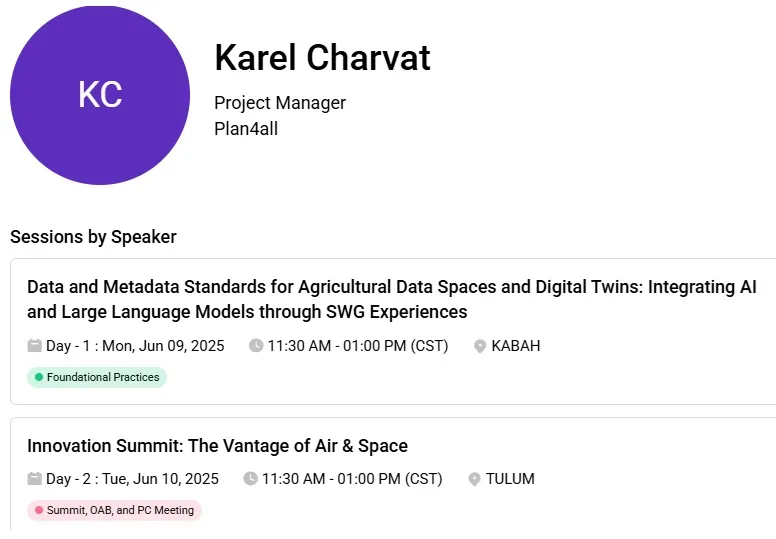
The meeting was also attended by Karel Charvat from Plan4All, which is cooperating closely with Lesprojekt in the Fair2Adapt project.
For more information about the event see this page: https://events.ogc.org/132MemberMeeting